Lissajous Curves Op Amp Circuit
date published
Nov 28, 2025
tools used
osci-render
project type
School
For our circuits class final project, we were tasked with making something with op amps only. After some discussion with my teammate Sarah, and inspired by some cool oscilloscope art we had seen online, we decided to try make a simpler version.
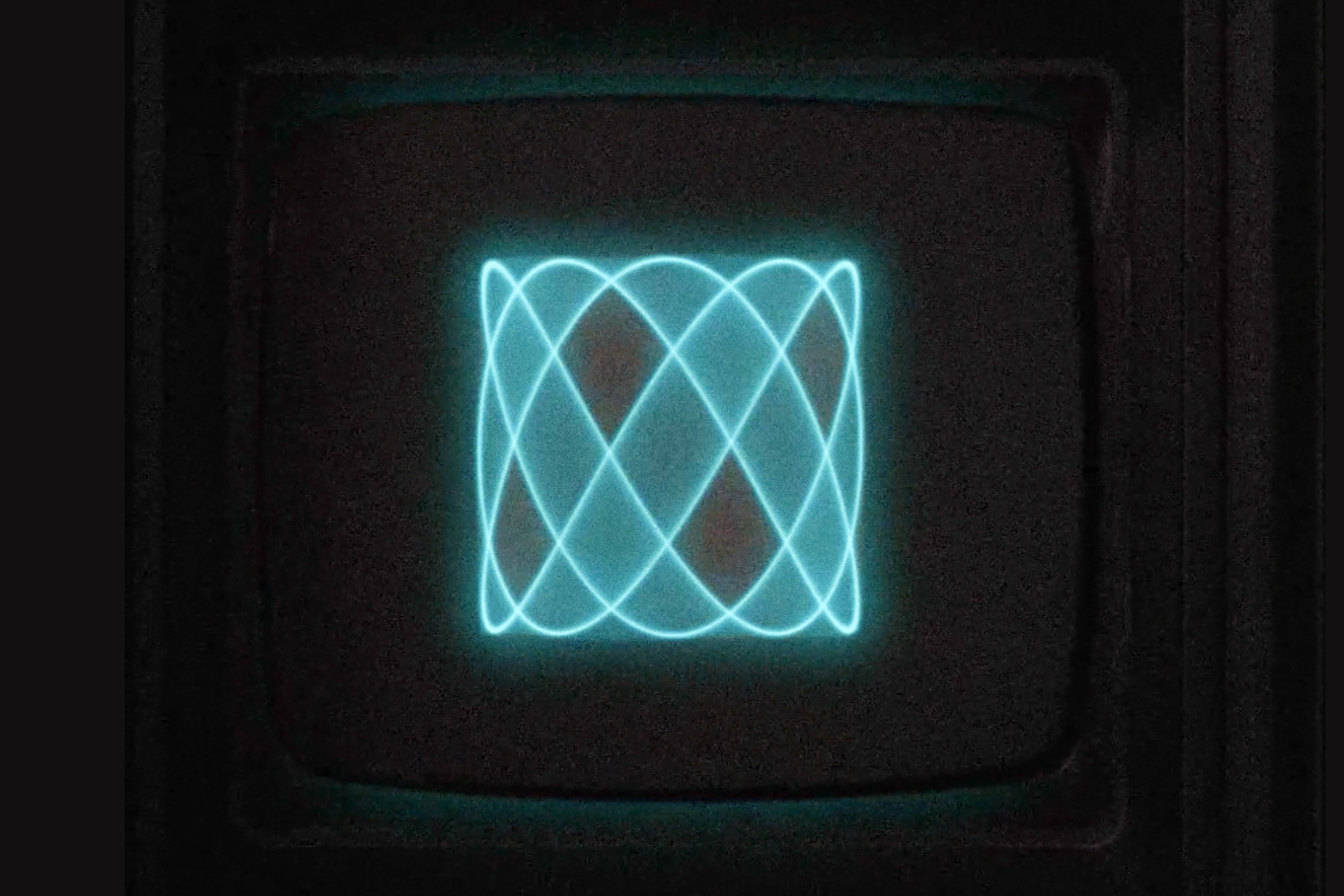
An oscilloscope typically reads only one input, and plots it its measurement against time. However, you can set an oscilloscope to read two measurements, and plot them against each other! By doing this, we can create 2D shapes by varying the intensity of both inputs. I realized that two sine waves, one for the x-axis, and one for the y-axis, was enough to create these shapes called Lissajous curves.
By changing the parameters of these waves, such as amplitude, frequency, and phase shift, it would be possible to alter the shape of the curves and showcase it's cool properties.
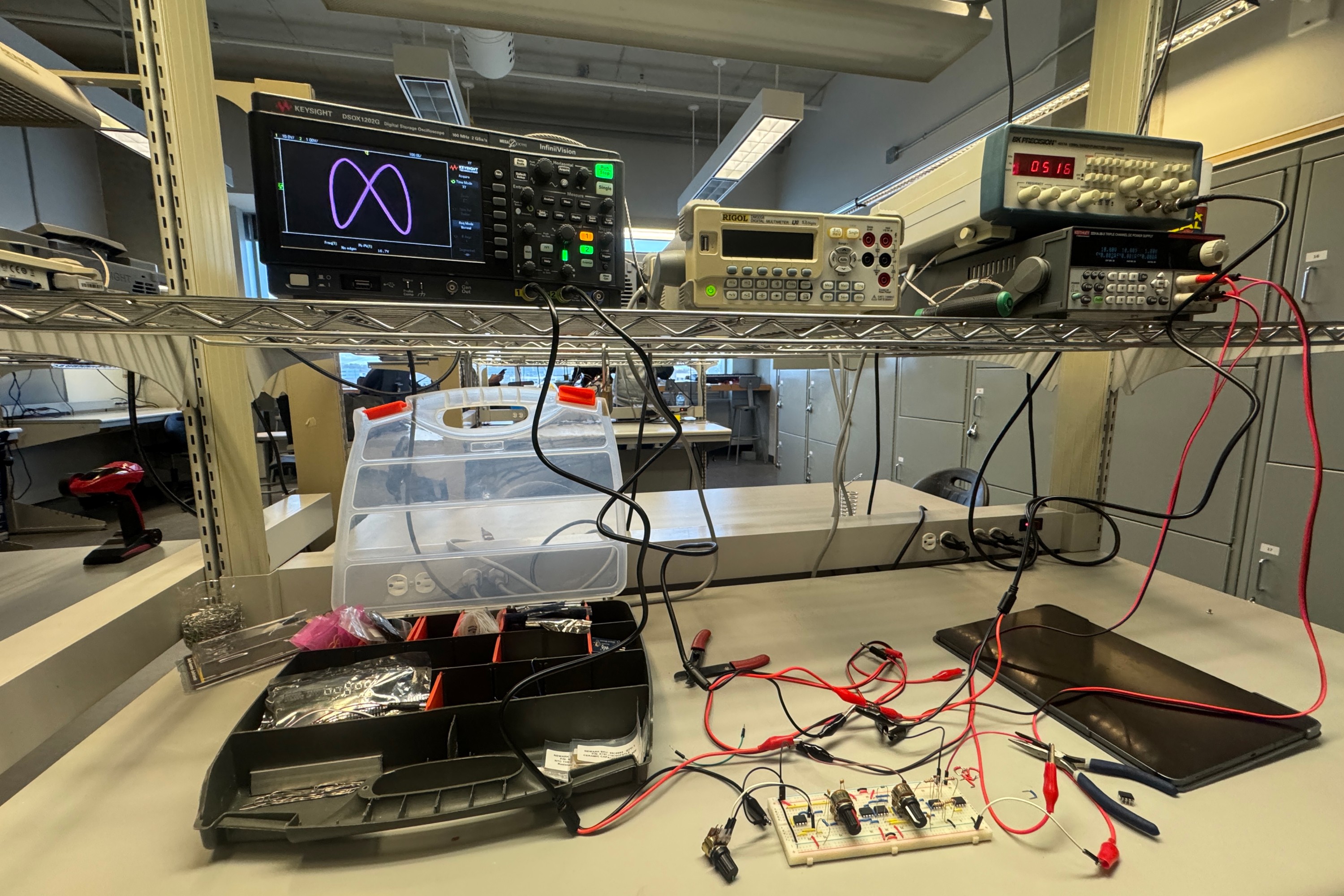
All non physical visualizations made in osci-render.
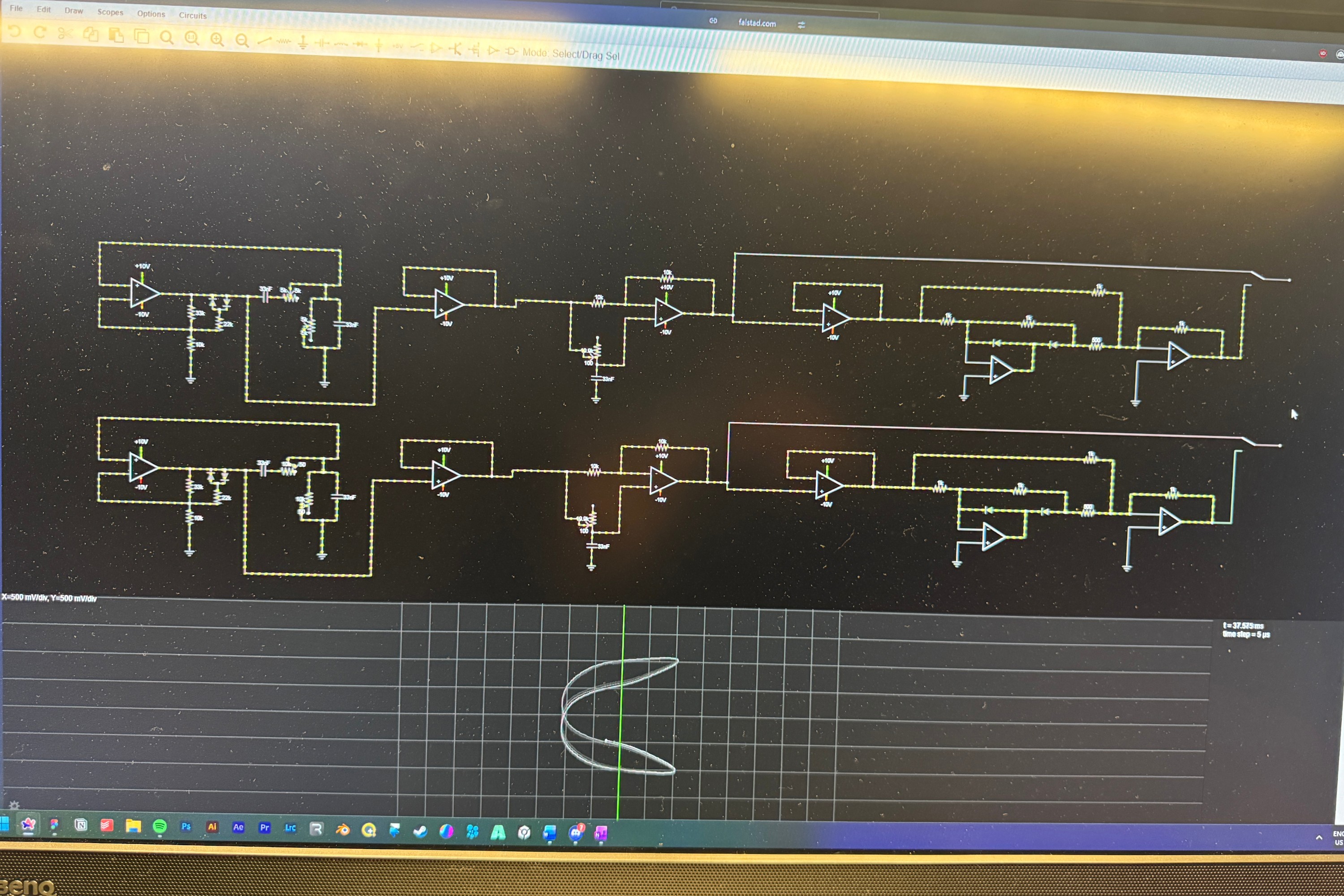
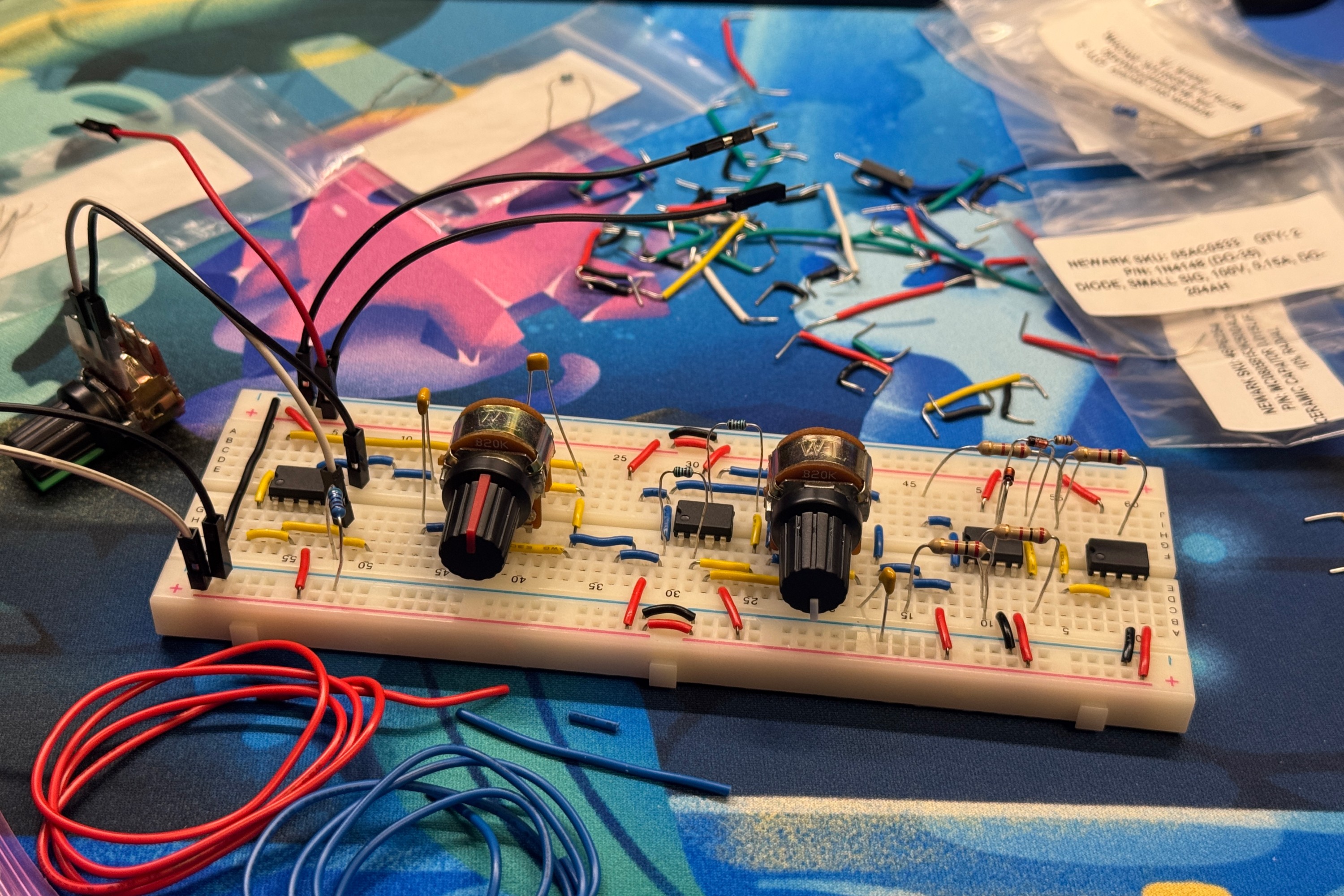
A simulated circuit: on the left, a Wein bridge oscillator- specifically chosen because it is an oscillator that lets us change the frequency and amplitude of oscillation easily- simply by using a potentiometer (variable resistor). In the middle, a phase shifter circuit, and finally on the right, a half wave rectifier, since the circuit needed a minimum of 3 sub circuits.
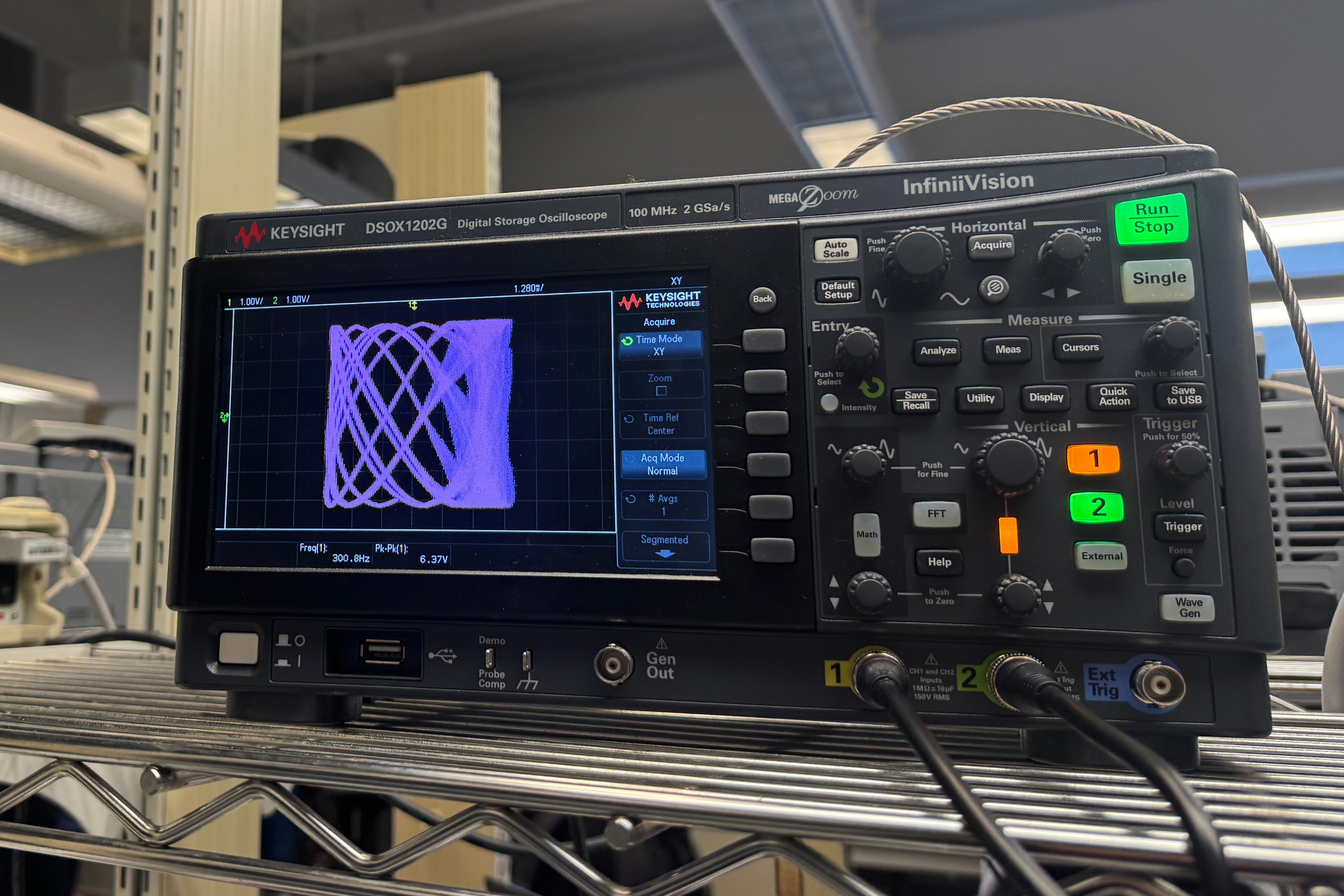
Depending on the ratios between the frequencies of the two waves, different shapes can be made. when the ratio between them is an irrational number, the lines do not match up, and you get this cool effect.
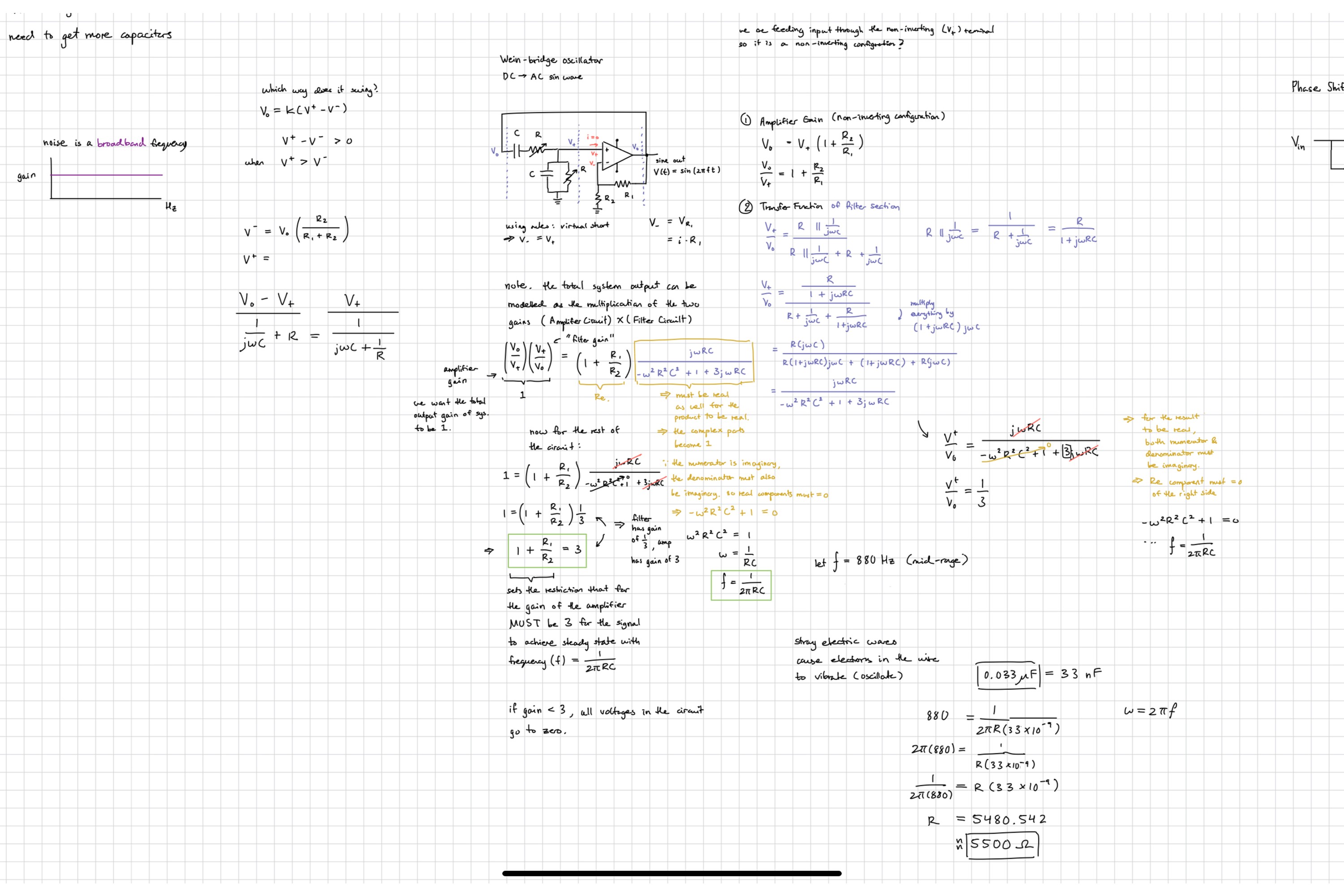
Some of the math behind the circuit. It was cool learning about how signals (especially Fourier transform and Laplace transform) could help support understanding how the circuit works.
This is just some other cool animation I made using osci-render. there's a lot you can do just by manipulating these Lissajous curves!